For People With Disability
Supports for People with Disability
The ACT Courts and Tribunal is committed to supporting people with disabilities by recognising their needs and making sure they can take part and engage fully when accessing the courts and tribunal.
The ACT Courts and Tribunal works with court and tribunal users who have disabilities to help them request reasonable adjustments, so they can participate fully and maintain their independence throughout their court or tribunal matter. We also work with support services to make sure our facilities and processes are accessible to everyone in the community.
If you need a reasonable adjustment, please contact our Disability Liaison Officer on (02) 6207 4493 or email disability@courts.act.gov.au.
Pre-hearing tours for people with a disability or additional needs
If you require extra assistance or adjustments to help you move around our buildings, you can book a tour before your court or tribunal date. This tour can help you become familiar with the layout and what to expect on the day.
To arrange a tour and let us know your access needs, please contact our Disability Liaison Officer on (02) 6207 4493 or email disability@courts.act.gov.au.
Hearing and speech impaired clients
Telephone enquiries
The National Relay Service (NRS) is a free telephone service that helps people who are deaf, hearing impaired, or who have a speech impairment to make phone calls or communicate with our teams.
If you are deaf or hard of hearing, you can contact the NRS using the numbers below:
- 133 677 – for people who are deaf or hard of hearing
- 1300 555 727 – for people who are deaf or hard of hearing and have a speech impairment
The NRS offers several different call options and support services. To find out which one best meets your needs, please visit their website:
Hearing assistance
Our hearing rooms and courtrooms are fitted with an infrared hearing system, and each front counter has a portable hearing loop available. Court staff can provide you with a receiver that includes a neck loop and headphones so you can use the system.
You can ask staff for the hearing equipment to use when in a hearing room or courtroom, or you can arrange this before your visit by contacting the Disability Liaison Officer on (02) 6207 4493 or email disability@courts.act.gov.au.
BindiMaps
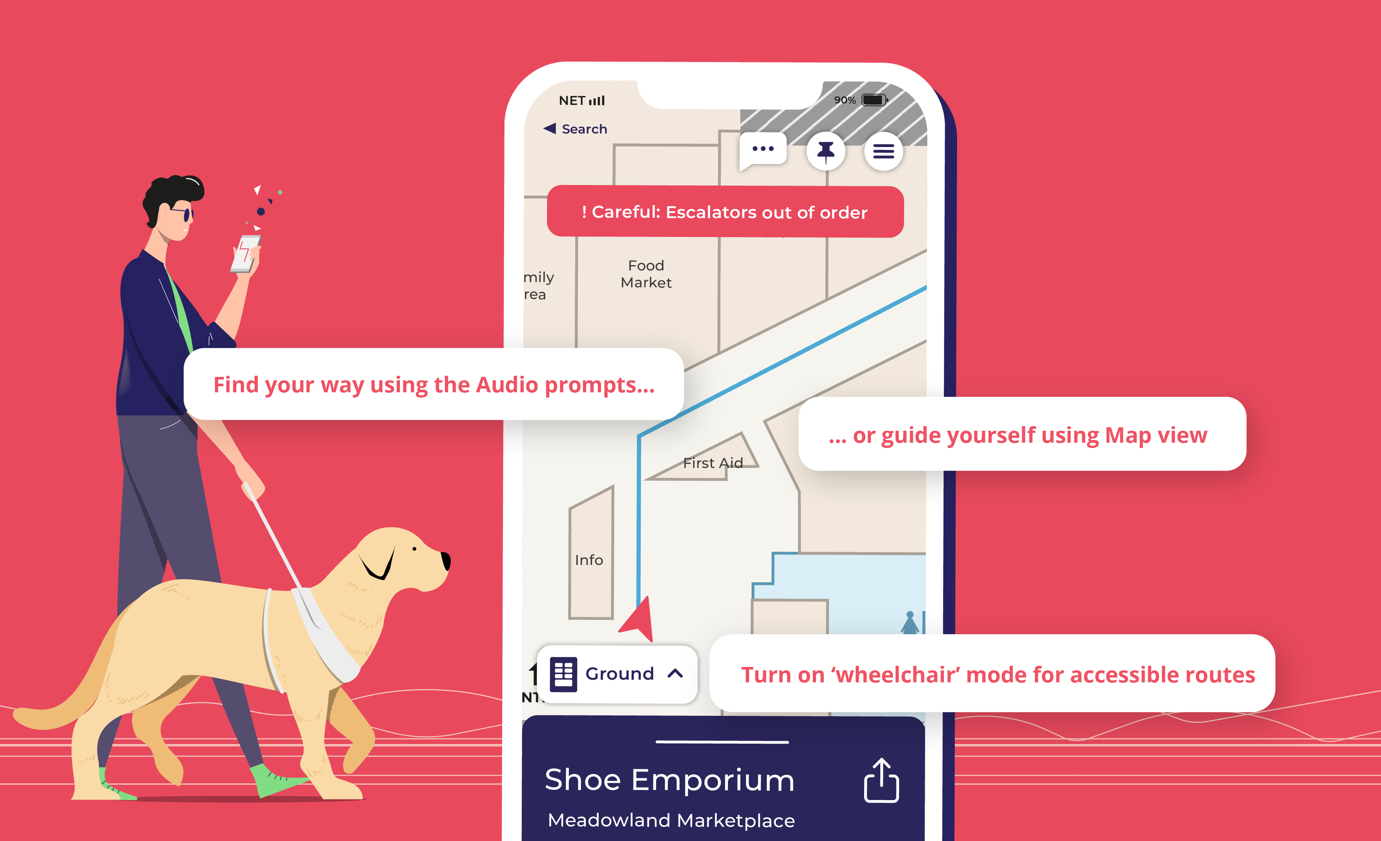
For directions once you are inside the Courts building, BindiMaps can help.
Download the BindiMaps free indoor navigation app, then choose maps, voice or text to guide you around the Courts building quickly and easily.
BindiMaps can find the most accessible route to your destination and will advise you of any potential hazards along the way.
You do not need to register for a BindiMaps account and it does not ask for your personal details. BindiMaps does not collect any personal information that could identify you.
You can choose to share your BindiMaps with another person in a calendar invitation or through a message. When the recipient clicks on the link they will be guided straight to that location
No app? You can also use BindiWeb to plan your route.


Visually impaired clients
You can ask for copies of transcripts from your court or tribunal hearing so you can read them using screen reader software. You can also request audio versions of transcripts if that suits your needs better. The Disability Liaison Officer can work with you to best understand your needs. Please contact them on (02) 6207 4493 or email disability@courts.act.gov.au to discuss how we can support you for your Court or Tribunal access needs.
Our court and tribunal websites are designed to meet Web Content Accessibility Guidelines 2.0 (WCAG). We are always working to improve accessibility and make our website easier for everyone to use. If you have any trouble accessing information on our website, please let us know by using the feedback link on our website.
Assistance Animals
If you plan to bring an assistance animal to the court or tribunal with you, you can contact the Disability Liaison Officer on (02) 6207 4493 or email disability@courts.act.gov.au to discuss how we can support you and your animal during your visit.
Your assistance animal should have appropriate papers and/or identification that shows it is trained to support you and your disability needs. Please note that all assistance animals must go through manual security screening when entering the building.
Disability Parking
The closest disabled parking spaces are in Hobart Place and in the One City Hill multi-story underground carpark at the southern end of Knowles Place, near Edinburgh Avenue. At this time, we are unable to offer disability parking any closer to the court.
For more parking options nearby, please refer to the City parking map.
Security Screening
Everyone entering the ACT Courts buildings must go through security screening, as required under our screening policy and conditions of entry policy.
Security procedures can be adjusted to meet the needs of people with disabilities. For example, if you use a wheelchair or other mobility device and cannot walk through the screening machine, staff will complete a manual check using a handheld wand.
Security screening also takes place at the ACT Civil and Administrative Tribunal.
If you would like to discuss security screening options related to your disability or access needs, please contact our Disability Liaison Officer on (02) 6207 4493 or email disability@courts.act.gov.au.
ACT Intermediary Program
The ACT has an intermediary program that can help vulnerable witnesses communicate their evidence more effectively during police interviews and court proceedings. Intermediaries are trained, impartial officers of the court who support clear communication.
Information about the intermediatory scheme is available on the ACT Human Rights webpage at www.hrc.act.gov.au/intermediaries.
Disability Action and Inclusion Plan
Our Disability Action and Inclusion Plan (DAIP) outlines how we will improve access, inclusion, and participation for people with disability across the ACT Courts and Tribunal. It sets out practical actions we will take to make our services, systems, and buildings more inclusive.
Our second DAIP builds on the progress made in our first plan. It identifies key areas where we can continue improving to ensure our services are inclusive and accessible. The DAIP reflects our ongoing commitment to supporting people with disability and promoting an inclusive justice system.
You can read our current DAIP here: Disability Action and Inclusion Plan 2025–2027
For further information about our DAIP, please contact our Disability Liaison Officer on (02) 6207 4493 or email disability@courts.act.gov.au